


Main computational resources:
High performance computing (HPC) clusters based on Intel Xeon technology FEYNMAN and DIRAC.
- FEYNMAN:
4 Fujitsu – Siemens Primergy computational nodes with a total of 96 cores and 64 GB RAM per node.
- DIRAC:
4 Dell PowerEdge computational nodes with a total of 160 cores and 256 GB RAM per node.
- Several local workstations.
- Access to the South-Eastern European (SEE) Grid cluster.
- Access to advanced computing infrastructures at several universities in USA, Sweden and Norway.
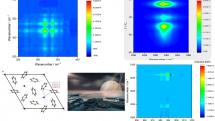
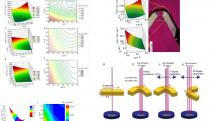
Main activities (selection):
A) Development of new theoretical/computational models:
- Development and implementation of advanced theoretical/computational models for in-depth understanding of the physics and chemistry of condensed phase systems, size-selected molecular clusters and isolated molecules at different conditions.
- Exact interpretation of molecular and solid-state spectroscopic data (IR, Raman, IRMPD, NMR, UV-VIS,…) on the basis of hybrid statistical physics – quantum mechanical models.
- Development of new computational approaches enabling in-depth understanding of photophysics and photochemistry of molecular and condensed phase systems.
- Development of models for advanced analysis of reaction pathways in the ground and excited electronic states.
- Understanding photochemical transformations with advanced computational approaches.
- Design of molecular electronic devices and development of models for in-depth understanding of the principles of their action. Understanding the charge carrier transfer through molecules.
- Understanding and predicting mechanical and electronic properties of advanced materials with the state-of-the-art computational/theoretical models.
- Development and implementation of hybrid ab initio molecular dynamics (AIMD) – time series analytic (TSA) approaches towards theoretical single-molecule spectroscopy at finite temperatures.
- Development of hybrid sequential statistical physics – quantum mechanical methodologies to study molecular and supermolecular species and processes relevant to atmospheric chemistry and climate science.
- Development of fundamentally new methodologies for understanding of the structure and dynamics in condensed phase systems, such as liquid water and water solutions of ions and biomolecules combining statistical physics simulations and complex networks approaches.
- Understanding the properties of molecules and condensed phase systems in external fields by computational modelling.
- Understanding the non-covalent intermolecular interactions in molecular clusters and condensed phases by electron density analyses, conceptual density functional theory and hybrid statistical physics – quantum mechanical simulations.
- Development of models for in-depth understanding of bioelectrochemical properties of complex biofilm systems under realistic experimental conditions.
- Understanding incorporation of small molecules in confining nanostructured molecular and supermolecular systems by advanced computational models.
- Understanding molecular adsorption on surfaces along with other phenomena related to catalysis with the aid of hybrid statistical physics – quantum mechanical approaches.
- Development of theoretical models aimed at understanding the dynamics of proton (and hydrogen atom) transfer in isolated molecular clusters and condensed phases.
- Understanding molecular actuation phenomena with classical and quantum mechanics.
- Magnetic properties of ions in solutions by combined statistical physics – quantum mechanics approaches.
- Wavelet, short-time Fourier transform and other time-frequency approaches for analysis of data generated from statistical physics simulations and experimental time-resolved spectroscopies.
B) Acquisition and advanced interpretation of experimental spectroscopic data:
- Acquisition of experimental IR, RAMAN, UV spectroscopic data under the influence of different external perturbations (temperature, electric/magnetic fields, etc.) using the experimental facilities available at the Institute of chemistry (including Raman spectrometer, FT IR interferometers, UV-VIS spectrophotometers) or facilities available at the external institutions with which the Laboratory has long-term collaboration (see the list below).
- Development and application of advanced data analysis techniques, such as e.g. generalized two-dimensional correlation analysis (GEN-2D-COS), moving window 2D-COS, perturbation-correlation moving window 2D-COS, two-trace-two-dimensional approaches (2T2D-COS), etc., for in-depth understanding of the experimental spectroscopic data, following of the phase transitions, subtle structural rearrangements in complex materials as well as kinetics of transformations.
- Understanding the physics of fundamental processes in complex materials from experimental spectroscopic data with the aid of theoretical models.
- Development of novel, advanced statistical approaches for comparison of similarity of in vitro and in vivo actions of various physiologically active substances, and their application to prove certain equivalences in physiological actions between originator and test products. The approaches developed so far have been accepted by MHRA.
- Development and application of time-series analysis methods suitable for chemical analysis.
C) Fundamental physics/chemistry research:
- Formal analogies between wavepacket propagation and propagation of a classical particle in continuous elastic medium.
- Ramsauer-Taunsend effect in interaction between atoms/ions and larger molecular systems.
- Latent symmetry effects in solids.
- Gravitation beyond nanoscale.
- Vibrational Stark effect.
Collaboration with academic institutions:
- New York University, USA (Abu-Dhabi branch).
- Uppsala University, Sweden.
- Southern Methodist University, TX, USA.
- Arizona State University, USA.
- University of Stavanger, Norway.
- University of Inssbruck, Austria.
- University of Vienna, Austria.
- Rugjer Boskovic Institute, Zagreb, Croatia.
- Jozef Stefan Institute, Ljubljana, Slovenia.
- University of Ljubljana, Slovenia.
Collaboration with industry:
- Alkaloid (pharmaceutical company), Skopje, Macedonia.
- Philip Morris International.
Selected publications:
- B. Pejova, A. Eid, L. Lari, A. Althumali, L. Siller, A. Kerrigan, L. Pejov, V. K. Lazarov, 3D SELF-ASSEMBLED POLAR VS. NON-POLAR NiO NANOPARTICLES NANOENGINEERED FROM TURBOSTRATIC Ni3(OH)4(NO3)2 AND ORDERED β-Ni(OH)2 INTERMEDIATES, Nanoscale, in press, https://doi.org/10.1039/D4NR03255A.
- B. Achevski, Lj. Pejov, MOLECULAR HYDROGEN ACTS AS A HYDROGEN BOND PROTON ACCEPTOR: FROM PROTONATED BETAINE TAGGING TO THE WEAKEST HYDROGEN BOND, J. Phys. Chem. A, 128, 3968-3981 (2024).
- E. Ahmed, D. P. Karothu, Lj. Pejov, P. Commins, Q. C. Hu, P. Naumov, FROM MECHANICAL EFFECTS TO MECHANOCHEMISTRY: SOFTENING AND DEPRESSION OF THE MELTING POINT OF DEFORMED PLASTIC CRYSTALS, J. Am. Chem. Soc., 142, 11219-11231 (2020). (INCLUDED ON JOURNAL’S COVER PAGE).
- J. B. Lefton, K. B. Pekar, U. Haris, M. E. Zick, P. J. Milner, A. P. Lippert, Lj. Pejov, T. Runcevski, DEFECTS FORMATION AND AMORPHIZATION OF Zn-MOF-74 CRYSTALS BY POST-SYNTHETIC INTERACTIONS WITH BIDENTATE ADSORBATES, Journal of Materials Chemistry A, 9, 19698-19704 (2021). (Part of the themed collection: Journal of Materials Chemistry A – HOT PAPERS).
- M. B. Haar, O. Lopez, Lj. Pejov, J. G. Fernandez-Bolanos, E. Lindback, M. O. Sydnes, 1,4-DIDEOXY-1,4-IMINO-D-ARABINITOL (DAB) NALOGUES POSSESSING A HYDRAZIDE IMIDE MOIETY AS POTENT AND SELECTIVE ALPHA-MANNOSIDASE INHIBITORS, ACS Omega, 5, 18507–18514 (2020).
- Lj. Pejov, M. K. Panda, T. Moriwaki, P. Naumov, PROBING STRUCTURAL PERTURBATION IN A BENT MOLECULAR CRYSTAL WITH SYNCHROTRON INFRARED MICROSPECTROSCOPY AND PERIODIC DENSITY FUNCTIONAL THEORY CALCULATIONS, J. Am. Chem. Soc., 139, 2318-2328 (2017).
- Nadezhda Markova, Ljupčo Pejov, Nina Stoyanova, Venelin Enchev, HYBRID MC/QC SIMULATIONS OF WATER-ASSISTED PROTON TRANSFER IN NUCLEOSIDES. GUANOSINE AND ITS ANALOGUE ACYCLOVIR, J. Biomol. Struct. And Dynamics, 35, 1168-1188 (2017).
- N. Markova, Lj. Pejov, V. Enchev, A HYBRID STATISTICAL MECHANICS – QUANTUM MECHANICAL MODEL FOR PROTON TRANSFER IN 5-AZAURACIL AND 6-AZAURACIL IN WATER SOLUTION, International Journal of Quantum Chemistry, 115, 477-485 (2015).
- Lj. Pejov, I. Petreska, Lj. Kocarev, DESIGNING FIELD-CONTROLLABLE GRAPHENE-DOT-GRAPHENE SINGLE MOLECULE SWITCHES. A QUANTUM-THEORETICAL PROOF-OF-CONCEPT UNDER REALISTIC OPERATING CONDITIONS, Journal of Chemical Physics, 143, 244704 (1-12) (2015).
- O. Maltsev, L. Yue, M. Rebarz, L. Hintermann, Lj. Pejov, Y-J. Liu, P. Naumov, VIBRATIONAL SPECTRA OF CHEMICAL AND ISOTOPIC VARIANTS OF OXYLUCIFERIN, THE LIGHT EMITTER IN THE FIREFLY BIOLUMINESCENCE, Chem. Eur. J., 20, 10782-10790 (2014).
- N. K. Nath, Lj. Pejov, S. M. Nichols, C. Hu, N. Saleh, B. Kahr, P. Naumov, MODEL FOR PHOTOINDUCED BENDING OF SLENDER MOLECULAR CRYSTALS, J. Am. Chem. Soc., 136, 2757-2766 (2014).
- E. Kohls, A. Mishev, Lj. Pejov, SOLVATION OF FLUOROFORM AND FLUOROFORM – DIMETHYLETHER DIMER IN LIQUID KRYPTON: A THEORETICAL CRYOSPECTROSCOPIC STUDY, J. Chem. Phys., 139, 054504 (15 pages) (2013).
- Pavlin Mitev, Philippe Bopp, Jasmina Petreska, Kaline Coutinho, Hans Ågren, Ljupco Pejov, Kersti Hermansson, DIFFERENT STRUCTURES GIVE SIMILAR VIBRATIONAL SPECTRA: THE CASE OF OH- IN AQUEOUS SOLUTION, J. Chem. Phys., 138, 064503 (10 pages) (2013).
- V. Kocevski, Lj. Pejov, ANHARMONIC VIBRATIONAL FREQUENCY SHIFTS UPON INTERACTION OF PHENOL(+) WITH THE OPEN SHELL LIGAND O2. THE PERFORMANCE OF DFT METHODS VERSUS MP2, J. Phys. Chem. A, 116, 1939-1949 (2012).
- P. Naumov, N. Ishizawa, J. Wang, Lj. Pejov, S. C. Lee, ON THE ORIGIN OF THE SOLID-STATE THERMOCHROMISM AND THERMAL FATIGUE OF POLYCYCLIC OVERCROWDED ENES, J. Phys. Chem. A, 115, 8563-8570 (2011).
- K. Hermansson, P. A. Bopp, D. Spångberg, Lj. Pejov, I. Bakó, P. D. Mitev, THE VIBRATING HYDROXIDE ION IN WATER, Chem. Phys. Lett., 514, 1-15 (2011), (FRONTIER ARTICLE – INCLUDED ON THE TOP COVER OF THE JOURNAL).
- J. Tomlinson-Phillips, J. Davis, D. Ben-Amotz, D. Spångberg, Lj. Pejov, K. Hermansson, STRUCTURE AND DYNAMICS OF WATER DANGLING OH BONDS IN HYDROPHOBIC HYDRATION SHELLS. COMPARISON OF SIMULATION AND EXPERIMENT, J. Phys. Chem. A, 115, 6177-6183 (2011).
- I. Petreska, Lj. Pejov, Lj. Kocarev, EXPLORING THE POSSIBILITIES TO CONTROL THE MOLECULAR SWITCHING PROPERTIES AND DYNAMICS: A FIELD-SWITCHABLE ROTOR-STATOR MOLECULAR SYSTEM, J. Chem. Phys., 134, 014708 (2011).
- Lj. Pejov, D. Spångberg, Kersti Hermansson, Al3+, Ca2+, Mg2+, AND Li+ IN AQUEOUS SOLUTION: CALCULATED FIRST-SHELL ANHARMONIC OH VIBRATIONS AT 300K, J. Chem. Phys., 133, 174513 (2010).
- V. Kocevski, Lj. Pejov, ON THE ASSESSMENT OF SOME NEW META HYBRID AND GENERALIZED GRADIENT APPROXIMATION FUNCTIONALS FOR CALCULATIONS OF ANHARMONIC VIBRATIONAL FREQUENCY SHIFTS IN HYDROGEN BONDED DIMERS, J. Phys. Chem. A, 114, 4354-4363 (2010).
- I. Petreska, Lj. Pejov, Lj. Kocarev, CONTROLLING THE TORSIONAL STOCHASTIC SWITCHING IN PHENYLENE ETHYNYLENE OLIGOMER MOLECULES BY EXTERNAL ELECTROSTATIC FIELDS, Phys. Rev. B, 78, 045209 (2008).
Contact: